
Why Is Black Dust Collecting Around My Air Vents?
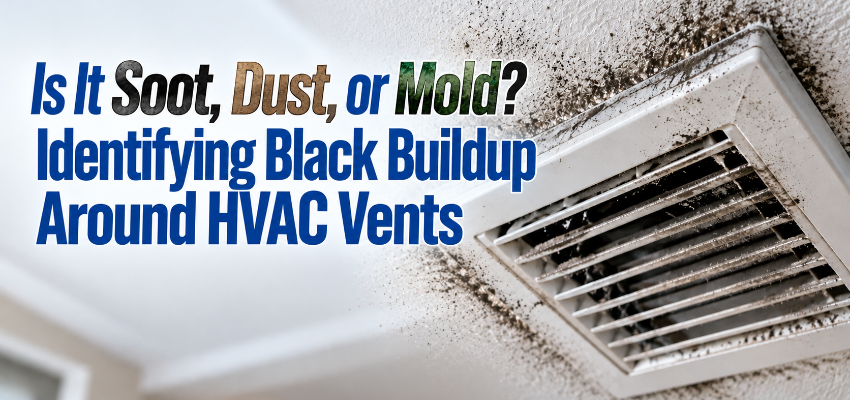
Dark streaks or black dust around an air vent can look alarming, especially when the rest of the ceiling or wall is clean. The discoloration does not point to one single cause, however. It may be ordinary dust collecting where air is moving, soot from indoor smoking, debris entering through leaks around the register, or, worst case, if moisture is present it can be microbial growth.
The location, texture and pattern of the residue usually provide better clues than the color alone.
Table of Contents
1. Dust Can Collect Where Air Moves Around the Register
Supply registers push conditioned air into the room, while return registers pull room air back toward the HVAC system. Both create air movement across nearby surfaces.
Fine airborne particles can collect at the edges of a vent, particularly where there are small gaps between the duct boot and the drywall or flooring. Air leaking through those gaps can carry dust from an attic, wall cavity, crawlspace or other unconditioned area and deposit it around the opening.
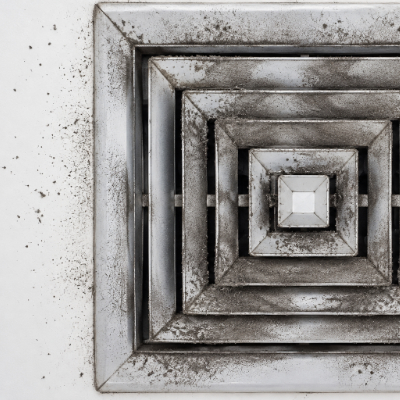
The U.S. Department of Energy's Building America Solution Center specifically recommends air-sealing duct boots to the surrounding drywall or floor because leakage at these connections can bring dust and other material into the living space.
If the dark material forms narrow streaks around the perimeter rather than coating the entire grille evenly, leakage around the register is worth investigating.
2. Black Residue May Be Soot

Not every dark deposit originates inside the duct system. Very small combustion particles can circulate through indoor air and settle on walls, ceilings and vent covers.
The EPA identifies candles, fireplaces, tobacco smoke, cooking and some fuel-burning appliances as indoor sources of particulate matter. If dark residue is appearing around multiple vents as well as on ceilings, walls, blinds or other surfaces, the source may be something occurring inside the home rather than dirty ductwork alone.
Considering this is important because cleaning the vents will not stop new soot from appearing if the particulate source remains.
3. Check the HVAC Filter and Its Fit
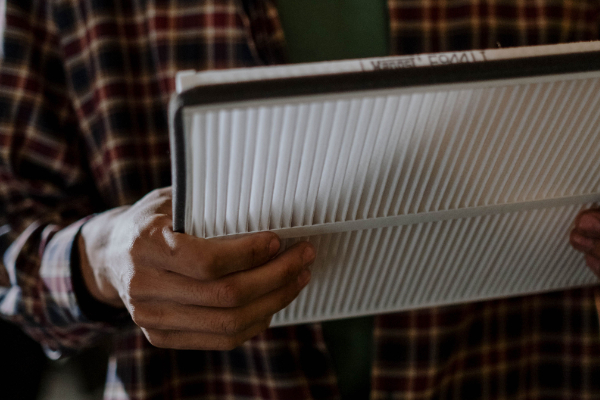
A filter is intended to capture particles as return air enters the HVAC equipment, but it only works properly when the air actually passes through the filter itself.
A filter that is overdue for replacement can become heavily loaded, and one that fits poorly may allow some air to bypass its edges. Our guide to MERV ratings and HVAC filters explains how filter efficiency differs and why the correct filter must be selected for the HVAC system.
When investigating recurring vent dust, check the filter's condition, dimensions and installation rather than assuming that a higher MERV number alone will solve the problem.
4. Black Material Is Not Automatically Mold
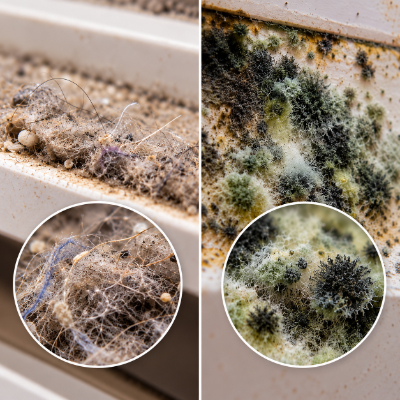
Dark spotting around a vent often leads homeowners to assume they are looking at "black mold." However, color alone cannot confirm that.
A substance that looks like mold may require expert evaluation or laboratory analysis for a 100% positive ID. Moisture must be addressed if mold is present, or growth can return after cleaning. The EPA's guidance on mold in HVAC systems recommends attention to condensation, leaks, cooling coils and wet insulation when moisture is involved.
If the area around a vent is routinely damp, shows water staining, or develops fuzzy or irregular growth rather than dry dust, the moisture source deserves attention. Steve's article on signs of mold around HVAC components provides additional warning signs to look for.
5. Cleaning the Register May Not Solve the Cause
A dusty vent cover can be removed and cleaned, but recurring black residue means it is worth asking why particles are accumulating there.
A professional inspection may look at:
- Dust and debris inside accessible ductwork
- Gaps around the duct boot or register
- Filter condition and fit
- Return-air contamination
- Evidence of moisture or condensation
- Unusual soot or combustion-particle sources
If substantial dust is actually being discharged from supply registers, that is different from a thin layer that has simply settled on the grille.
Want us to help diagnose the issue?
Take a few clear pictures of the affected vents and nearby surfaces and email them to our team for review.Email Photos to stevesairductcleaning11@gmail.com
Find the Source Before Treating the Stain
Black dust around an air vent is a symptom, not a diagnosis. Wiping the surface clean may improve its appearance, but it will not correct an air leak, poor filter fit, an indoor soot source, or moisture problems.
Pay attention to where the residue appears, whether it is dry or damp, how quickly it returns, and whether similar deposits are showing up elsewhere in the house. Those clues help separate a routine cleaning issue from a problem that requires HVAC, duct, moisture or combustion-system attention.
Start Breathing Easier.
Your air ducts are the lungs of your home and keeping them clean keeps you and your family healthier and your HVAC equipment working optimally.