Household Sanitizers: Choosing the Right Product for the Right Surface
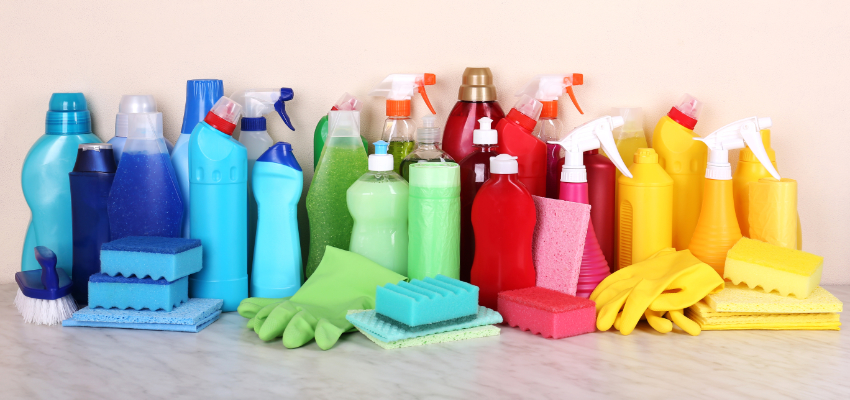
Most people will use the word “sanitizer” as a catch-all term, but in practice, the right product depends on the surface, the soil load, and the goal. A kitchen counter after raw chicken prep is not the same cleaning problem as a bathroom sink, a sealed stone top, a child’s toy, or an upholstered chair. The biggest mistake people make is assuming stronger is always better. In reality, the best sanitizing approach is surface-specific, label-driven, and paired with proper cleaning first.
For homeowners, that means understanding the difference between routine cleaning, sanitizing, and disinfecting. For a company like Steve’s Air Duct Cleaning, it also means knowing when a surface can be handled with standard household products and when a more specialized process is appropriate.
Start With the Surface, Not the Product
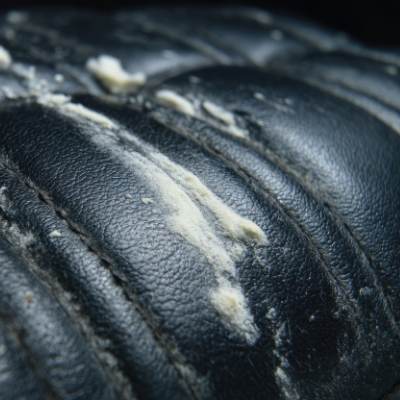
A sanitizer is only useful when it is compatible with the material underneath it. Hard, non-porous surfaces are the easiest category. Countertops, sinks, appliance handles, toilet exteriors, and many sealed bathroom surfaces can usually handle common household sanitizing or disinfecting products when used correctly. Porous or semi-porous materials are a different story. Upholstery, unfinished wood, carpets, duct liners, and delicate coatings can be stained, degraded, or left with residues if the wrong chemistry is applied.
That is why product selection should always follow three questions:
- What is the surface made of?
- Is the goal routine reduction of germs, or higher-level disinfection after some event?
- Will residues, moisture, or odor create a separate problem afterward?
For most homes, that framework keeps cleaning practical and prevents unnecessary chemical use.
Common Household Sanitizer Categories by Surface
1. Food-Contact Hard Surfaces
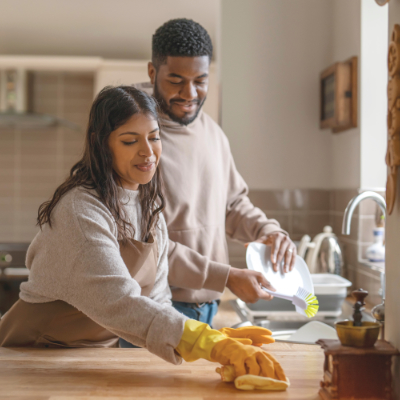
Kitchen counters, cutting-board areas, refrigerator handles, faucet levers, and high-touch dining surfaces need products that are both effective and appropriate for areas near food. This is where homeowners should be especially careful. Some products are excellent disinfectants but are not ideal for routine use around food prep unless the label specifically supports that application and any required rinse step is followed.
For many households, the safest approach is routine cleaning with a detergent or mild cleaner first, then targeted sanitizing only when needed, especially after handling meat, eggs, or heavily soiled items. On food-contact surfaces, overusing aggressive disinfectants can create a residue-management problem if the user is not reading the label closely.
2. Bathroom Non-Porous Surfaces
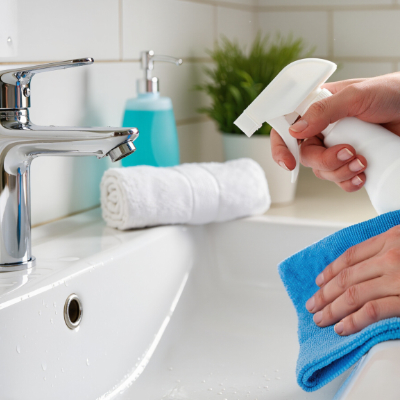
Bathrooms are where stronger chemistry is often justified. Toilet exteriors, sink basins, faucet handles, shower trim, and other hard, non-porous surfaces can usually tolerate disinfectant-grade products better than kitchen surfaces. This is also where dwell time matters most. Spraying and immediately wiping dry may clean the surface visually, but it may not deliver the antimicrobial performance the label promises.
Bathroom cleaning is a good example of why “clean” and “sanitized” are not the same thing. Soap scum, skin oils, and mineral film can block the chemistry from contacting the surface evenly. If the surface is not actually clean first, the sanitizer stage is compromised.
3. Glass, Screens, and Electronics
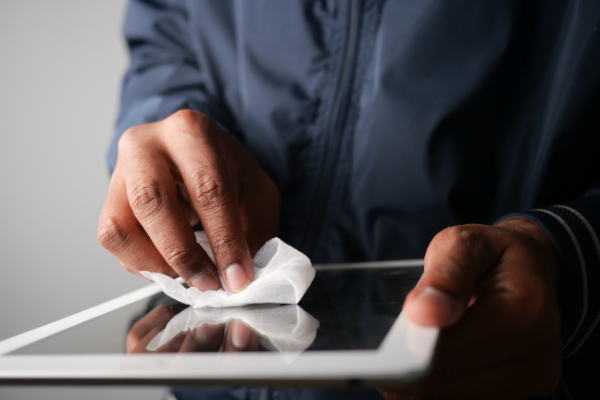
This is one of the most mishandled categories in residential cleaning. Many people reach for bleach-based or heavy disinfectant products when they should be using low-residue cleaners or manufacturer-approved wipes. Glass can streak, anti-glare coatings can be damaged, and sensitive plastics can haze or crack.
For touchscreens, remotes, and electronics-adjacent surfaces, less moisture and lower residue are usually better. Homeowners should think in terms of controlled application, not saturation.
4. Natural Stone, Finished Wood, and Specialty Surfaces
Granite, quartz, marble, butcher block, and finished wood all require more restraint than standard laminate or ceramic. Acidic products, oxidizers, and some quaternary ammonium blends can dull finishes or leave buildup over time. With stone and wood, “safe for the surface” is often more important than “strongest kill claim on the shelf.”
Routine maintenance on these surfaces is usually best handled with a compatible cleaner and selective sanitizing only when contamination actually justifies it.
5. Soft Surfaces and Textiles
Couches, mattresses, rugs, curtains, and fabric dining chairs are where homeowners often misuse hard-surface chemicals. A spray that works on a countertop may not belong on fabric. Soft surfaces can trap moisture, hold residues, discolor, or develop odor if overtreated. In homes with pets, children, smoke exposure, or recurring spills, fabric-safe products may help with limited maintenance, but deep hygiene issues usually require extraction, controlled drying, and material-specific chemistry.
This is also where the line between consumer and professional cleaning starts to matter more.
Household Cleaners vs Professional Cleaning Products
There is a real difference between consumer-grade household sanitizers and professional cleaning-industry chemistry. Retail products are designed for convenience, broad availability, and relatively simple use instructions. Professional products are often more concentrated, more surface-specific, and used within a larger process that includes soil removal, dilution control, application method, ventilation, rinse decisions, and drying management.
That does not mean professional products are automatically “better” for every homeowner task. It means they are better when the operator understands the material, the contamination type, and the correct process. A homeowner wiping down a sealed countertop does not need the same chemistry or equipment that a trained technician may use for larger-scale sanitizing work.
| Comparison Point | Home / DIY Sanitizers | Professional Sanitizers |
|---|---|---|
| Typical form | Ready-to-use sprays, wipes, diluted bleach products, alcohol-based surface products | Concentrates, RTU specialty products, electrostatic-compatible products, application-specific antimicrobials |
| Best use case | Daily touchpoint cleaning, kitchen and bath maintenance, limited post-illness cleanup | Larger contamination events, multi-room projects, commercial settings, specialty materials, odor/moisture-managed work |
| Surface targeting | Usually broad and simplified | Often more material-specific and task-specific |
| Ease of use | High; intended for general consumers | Lower; often requires training, dilution control, PPE awareness, and process discipline |
| Risk of misuse | Moderate; common issues are overuse, wrong surface, poor dwell time | Higher consequence if misapplied because products may be stronger or more specialized |
| Residue management | Usually simpler, but still label-dependent | More variable; may require rinse steps, extraction, or controlled drying |
| Cost efficiency | Good for small routine tasks | Better value for larger or more technical jobs when used correctly |
| When it makes sense | Regular household upkeep | When surface sensitivity, scale, or contamination level exceeds a basic DIY approach |
Where Air Duct Sanitizing Fits In
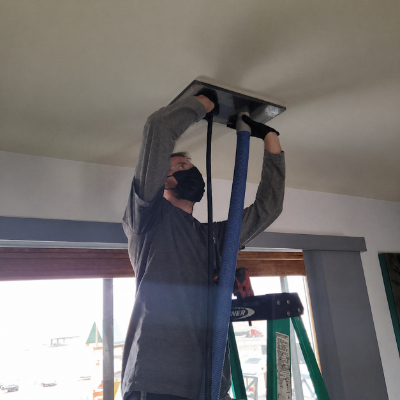
Most homeowners think first about counters and bathrooms, but sanitizing discussions sometimes extend to the HVAC system as well. That is a specialized category because ductwork is not a standard wipe-and-go surface. Application method, product suitability, residue control, and system condition all matter. When that kind of work is justified, it should be handled as a system service, not as improvised DIY spraying into vents.
Practical Rules for Better Household Sanitizing
The most effective home sanitizing habits are not complicated:
- Clean visible soil first.
- Match the product to the material.
- Do not treat every surface like a bathroom fixture.
- Use stronger products selectively, not constantly.
- Avoid oversaturating soft goods and porous materials.
- Respect label directions, especially where food, residue, and ventilation are involved.
The real goal is not to turn the home into a hospital. It is to reduce contamination appropriately without damaging finishes, creating residue problems, or using the wrong chemistry in the wrong place.
Steve’s has you covered when it comes to Air Duct Sanitizing Learn More.
Start Breathing Easier.
Your air ducts are the lungs of your home and keeping them clean keeps you and your family healthier and your HVAC equipment working optimally.